


According to the Global Initiative for Chronic Obstructive Lung Disease (GOLD) global strategy for the diagnosis, management, and prevention of chronic obstructive pulmonary disease 2024 report3, Chronic Obstructive Pulmonary Disease (COPD) is defined as “a heterogeneous lung condition characterized by chronic respiratory symptoms (dyspnea, cough, sputum production and/or exacerbations) due to abnormalities of the airways (bronchitis, bronchiolitis) and/or alveoli (emphysema) that cause persistent, often progressive, airflow obstruction.”
COPD is a common, preventable and treatable disease, the result of long-term exposure and inhalation of harmful substances.
Factors during gestation period and childhood
In childhood, important risk factors for developing COPD later in life are:
Manifestations of COPD are subtle and gradual worsens over time. In the early stages, it is characterized by a persistent cough (sometimes referred to as ‘smokers cough’) with or without production of phlegm. In addition, other common symptoms are:
Exacerbations of COPD are episodes of increased severity of symptoms, most commonly triggered by respiratory infections such as the seasonal flu. Exacerbations accelerate the decline in lung function and worsen the condition.
Individuals with COPD are considered a vulnerable population, at high risk for complications and death from influenza infection, pneumonia, surgery etc.
COPD is associated with an increased risk for more severe COVID-19 manifestations and poor outcome, although it is not considered a risk factor for acquiring COVID-19 more easily than the general population (Simons et al. Caring for patients with COPD and COVID-19: a viewpoint to spark discussion. Thorax.. December 2020 Vol 75 No 12).
COPD requires close monitoring by a pulmonologist who will evaluate your symptoms, complaints and Spirometry, will determine disease severity, as well as identify possible comorbidities, in order to provide the best treatment options for you. This includes quitting smoking and one or more of the following treatments:
Secondary prevention (among those who have COPD) aims at reducing the frequency and severity of exacerbations by:
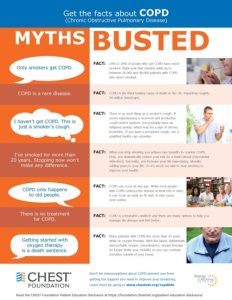
The Chest Foundation has published a facts sheet presenting common myths for COPD2
ANNA S. TZORTZI MD, FCCP
PNEUMONOLOGIST
References
1. Forum of International Respiratory Societies https://www.firsnet.org/news-and-events/news-article/154-world-copd-day-2020
2. CHEST Foundation https://foundation.chestnet.org/wp-content/uploads/2020/05/COPD-Mythbuster.pdf
3. GLOBAL INITIATIVE FOR CHRONIC OBSTRUCTIVE LUNG DISEASE GLOBAL STRATEGY FOR THE DIAGNOSIS, MANAGEMENT, AND PREVENTION OF CHRONIC OBSTRUCTIVE PULMONARY DISEASE (2024 REPORT) https://goldcopd.org/
According to the Global Initiative for Chronic Obstructive Lung Disease (GOLD) global strategy for the diagnosis, management, and prevention of chronic obstructive pulmonary disease 2024 report3, Chronic Obstructive Pulmonary Disease (COPD) is defined as “a heterogeneous lung condition characterized by chronic respiratory symptoms (dyspnea, cough, sputum production and/or exacerbations) due to abnormalities of the airways (bronchitis, bronchiolitis) and/or alveoli (emphysema) that cause persistent, often progressive, airflow obstruction.”
COPD is a common, preventable and treatable disease, the result of long-term exposure and inhalation of harmful substances.
Factors during gestation period and childhood
In childhood, important risk factors for developing COPD later in life are:
Manifestations of COPD are subtle and gradual worsens over time. In the early stages, it is characterized by a persistent cough (sometimes referred to as ‘smokers cough’) with or without production of phlegm. In addition, other common symptoms are:
Exacerbations of COPD are episodes of increased severity of symptoms, most commonly triggered by respiratory infections such as the seasonal flu. Exacerbations accelerate the decline in lung function and worsen the condition.
Individuals with COPD are considered a vulnerable population, at high risk for complications and death from influenza infection, pneumonia, surgery etc.
COPD is associated with an increased risk for more severe COVID-19 manifestations and poor outcome, although it is not considered a risk factor for acquiring COVID-19 more easily than the general population (Simons et al. Caring for patients with COPD and COVID-19: a viewpoint to spark discussion. Thorax.. December 2020 Vol 75 No 12).
COPD requires close monitoring by a pulmonologist who will evaluate your symptoms, complaints and Spirometry, will determine disease severity, as well as identify possible comorbidities, in order to provide the best treatment options for you. This includes quitting smoking and one or more of the following treatments:
Secondary prevention (among those who have COPD) aims at reducing the frequency and severity of exacerbations by:
The Chest Foundation has published a facts sheet presenting common myths for COPD2
ANNA S. TZORTZI MD, FCCP
PNEUMONOLOGIST
References
1. Forum of International Respiratory Societies https://www.firsnet.org/news-and-events/news-article/154-world-copd-day-2020
2. CHEST Foundation https://foundation.chestnet.org/wp-content/uploads/2020/05/COPD-Mythbuster.pdf
3. GLOBAL INITIATIVE FOR CHRONIC OBSTRUCTIVE LUNG DISEASE GLOBAL STRATEGY FOR THE DIAGNOSIS, MANAGEMENT, AND PREVENTION OF CHRONIC OBSTRUCTIVE PULMONARY DISEASE (2024 REPORT) https://goldcopd.org/