
Browsing Authoradmin

Legionnaire’s Disease

Legionnaire’s Disease


What is Legionnaire’s disease?

A bacterium called Legionella that causes an acute respiratory infection and be found in freshwater environments or in other complex water systems such as:

  • Water supply systems
  • Water pipes (pipes with a little water, with corrosion and salts, shower heads)
  • Heating and cooling systems
  • Hot or cold water tanks such as swimming pools, hot tubs, fountains but also natural hot water tanks for example thermal baths etc.
  • Mechanical devices such humidifiers or medical devices that use running water

Environments with temperatures of 20-45°C are ideal conditions for Legionella to grow and multiply. Of the many different strains of the bacterium, legionella pneumophila is the strain associated with the human illness, presenting in two clinical forms called Legionnaires’ Disease and Pontiac Fever.1,2

Legionnaire’s disease can present

  • Sporadically: when it is not connected to a particular source
  • In outbreaks: when two or more people are sick in the same area at the same time.

Depending on the environment in which it presents, it can be distinguished as:

  • Hospital Legionnaires’ disease: when hospitalized for the past 2-10 days
  • Traveler Legionnaire’s disease: when a trip has taken place over the previous 2-10 days.

Modes of transmission2

  • By inhalation of contaminated water droplets
  • By ingestion of contaminated water, although this is rare
  • Human-to-human transmission is extremely rare

Risk Factors2

Not everyone who is exposed to Legionella will get ill. People at risk for getting sick from Legionella include:

  • Ages> 50 years old
  • Smoking: Smokers and ex-smokers
  • Chronic respiratory disease for example, Chronic Obstructive Pulmonary Disease
  • Diabetes
  • Renal, Hepatic insufficiency
  • Cancer
  • Immunosuppression due to disease or treatment (ie. chemotherapy, radiotherapy)

Legionnaire’s Disease (Legionella Pneumonia)1,2

Incubation period of this illness is ~2-10 days. Legionella Pneumonia is a serious pneumonia that requires hospitalization with a mortality rate of 1-10%. However, early treatment with antibiotics has significantly improved the prognosis and outcome of the disease.
SYMPTOMS: fever, cough, shortness of breath, headache and nausea, diarrhea, confusion. Symptoms begin 2-10 days after exposure.
DIAGNOSIS: Chest X-ray, urine test, bacterial culture in sputum (prior to antibiotic treatment)
TREATMENT: antibiotics with macrolides or fluoroquinolones while also treating the symptoms

Pontiac Fever1,2

Less severe, it usually resolves in 3-5 days. Symptoms may begin within a few hours of exposure, with flu-like symptoms such as fever and muscle aches. No specific medical treatment is needed except for symptoms treated with antipyretic analgesics.

Prevention1,2

Prevention is based on regular management and treatment of complex water systems to keep Legionella from growing. The following is important for controlling outbreaks:

  • Regular cleaning and management of all complex water systems
    • With use of water disinfectants (ie. chlorination, ionization, hydrogen peroxide, ultraviolet radiation)
  • Search for the source of the original outbreak and treat immediately with either:
    • Chlorine treatment or
    • Heat shock

Monitoring and Surveillance1

In Greece there is a diligent system for monitoring and controlling the quality of water resources and water supply facilities through multiple parameters including the search for toxic substances and pathogenic microorganisms. Audits of water systems are made systematically throughout the country and especially in tourist areas. The recent cases of Legionnaire’s disease in Greece are the first ever reported and are considered sporadic and not attributed to a specific source. The European Centre for Disease Prevention and Control is also regularly updated.3

Recording, monitoring and reporting Legionnaire’s Disease is obligatory in Greece and is completed by a special form of the Ministry of Health and the Hellenic Center for Disease Control and Prevention (HCDCP) for the effective epidemiological surveillance of the disease.

ANNA S. TZORTZI MD, FCCP
PNEUMONOLOGIST


References

  1. Κέντρο Ελέγχου & Πρόληψης Νοσημάτων. ΝΟΣΟΣ ΤΩΝ ΛΕΓΕΩΝΑΡΙΩΝ/ΛΕΓΕΩΝΕΛΛΩΣΗ. http://www.keelpno.gr/el-gr/νοσήματαθέματαυγείας/λοιμώδηνοσήματα/νο%CF. Accessed August 2, 2018.
  2. Centers for Disease Control and Prevention. Legionella (Legionnaires Disease and Pontiac Fever). https://www.cdc.gov/legionella/about/index.html. Published 2018. Accessed August 2, 2018.
  3. European Centre for Disease Prevention and Control. European Legionnaires’ Disease Surveillance Network (ELDSNet). https://ecdc.europa.eu/en/about-us/partnerships-and-networks/disease-and-laboratory-networks/eldsnet. Accessed August 2, 2018.
Τuberculosis

Τuberculosis

 
Tuberculosis (TB) is an infectious disease caused by the Mycobacterium Tuberculosis, that most commonly affects the respiratory system, but disease can also manifest in other organs, called extrapulmonary Tuberculosis.

Globally, Tuberculosis is considered among the 10 major causes of death and first cause of death among HIV/AIDS patients1. The economical and disease burden of the current pandemic is expected to reverse the progress made in TB prevention, by aggravating the poverty and malnutrition in the developing world1.

Inhalation of infected aerosol droplets, usually exhaled by a patient, is the route of disease transmission. This first contact may lead either to immediate elimination by the host defenses, either to the gradual onset of pulmonary disease, or to a latent infection that bears the potential to be activated at any time in the future1.

Epidemiology:

25% of the global population is estimated to be infected, mostly in the developing countries1.

In Greece, the prevalence among citizens of Greek nationality is declining, however there is an increasing prevalence of cases observed among other nationalities, mainly refugees and immigrants2.

Symptoms3:

Persistent cough, weight loss, fever, night sweats, lymphadenopathy.

Diagnosis3:

  • Imaging tests (Radiography, CT scan)
  • Tuberculin skin testing
  • Interferon-gamma release assay (IGRA)
  • Culture of Mycobacterium tuberculosis in sputum, bronchoalveolar lavage and pleural fluid
  • Pleural or lung biopsy
  • Sputum acid-fast bacilli (AFB) smear
  • Nucleic acid amplification (NAA) testing

Treatment3:

Active pulmonary disease is treated for 6 months, starting with a four-drug regimen for the first 2 months and continuing with two drugs for the remaining 4 months. During treatment patients are monitored for possible side effects and for their adherence to treatment as interruptions may lead to treatment failure and /or drug resistance. A special disease entity among types of drug resistant TB is the multidrug resistant TB representing a major and public health threat.

Prevention:

The bacille Calmette–Guérin (BCG) vaccine, offers partial protection, especially from severe forms of TB in children3.

Research for the development of a more successful vaccine, effective across all age groups, is ongoing, and some promising candidates are used in the course of clinical trials.4

ANNA S. TZORTZI MD, FCCP
PNEUMONOLOGIST


References

  1. https://apps.who.int/iris/bitstream/handle/10665/337538/9789240016095-eng.pdf
  2. https://eody.gov.gr/wp-content/uploads/2019/01/tuberculosis2004_2010.pdf
  3. https://www.uptodate.com/contents/table-of-contents/infectious-diseases/tuberculosis
  4. https://www.who.int/teams/global-tuberculosis-programme/vaccines

World Immunization Week 24-30 April 2023

Η Παγκόσμια εβδομάδα εμβολιασμού 2021, έχει υψηλό ειδικό βάρος και ιδιαίτερη σημασία, καθώς η παγκόσμια κοινότητα διέρχεται τα διαδοχικά κύματα της πανδημίας SARS-CoV-2.

Smoking: A Chronic Epidemic

Smoking: A Chronic Epidemic


Smoking has been the most common human addictive behavior for nearly four centuries. The harmful effects of smoking began to be gradually recognized around 1950. Today, the complex detrimental impact of both active smoking and passive exposure to other people’s smoking is widely known and scientifically documented.

Nicotine, the primary ingredient in tobacco products, ranks second among addictive substances, only after heroin. It is the reason why smokers remain bound to its use.

The use of any kind of tobacco product, including the newer electronic and heated nicotine-releasing products, inevitably leads to addiction and dependency. Contrary to current unsubstantiated claims flooding the internet, there is no safe level of smoking, and no tobacco product is safe.

Each year, approximately 8,000,000 people worldwide die from smoking, 1,200,000 of whom die from passive smoking, including 65,000 children.

As terms like epidemic, pandemic, morbidity, and mortality rates have recently become prominent in our lives, we understand that these figures essentially describe a continuous epidemic—predictable, treatable, and preventable. This epidemic has quietly persisted for decades, differing mainly in that it is not transmitted from person to person and thus does not disrupt the constant rhythm of modern, primarily Western, society and its systems. However, the morbidity and mortality caused by passive smoking—the exposure to the smoke of fellow citizens, colleagues, and parents—could be considered to have a transmissible dynamic from smoker to non-smoker via smoke.

The World Health Organization classified smoking as a chronic disease in 2008, correctly labeling it as the greatest epidemic of all time.

Smoking is a multisystem disease, as its impacts are not limited to the respiratory system. The micro-particle pollution generated by smoking, enters into the bloodstream, damaging even distant organs.

The effects on pregnant women, fetuses, infants, and children are particularly significant, as is the environmental impact. Pollution from cigarette butts, chemicals, pesticides, and tobacco industry waste, leaves a negative mark on ecosystems and water sources.

Especially today, in the context of the COVID-19 pandemic, smokers are even more vulnerable. Chronic obstructive pulmonary disease (COPD) and its frequent comorbidities make smokers prone to infections in general, and SARS-CoV-2 in particular, increasing the risk of complications and adverse outcomes of the disease.

The classic hand-to-mouth motion of smokers is believed to facilitate the transfer of SARS-CoV-2 to the entry points (mouth, nose), raising the risk of infection. Moreover, staying at home as part of protective measures against COVID-19, combined with the accompanying anxiety, increases the likelihood of passive exposure for family members.

Smoking cessation, although challenging and strenuous, is the only way forward for smokers, who will enjoy the benefits from the very first moment, gaining symptom reduction and well-being as they move further away from their last cigarette.

Many smokers attribute their smoking to stress, claiming it calms them, an argument also used by many teenagers. The truth is that they indeed feel some relief when they smoke, not due to stress reduction, but due to the alleviation of withdrawal symptoms satisfied by the effect of nicotine on the deprived brain of the smoker.

Since prevention is better than cure, and smoking cessation, though feasible, involves difficulties, it is crucial to act proactively and invest in prevention. We must start early, from childhood, to equipp young children and teenagers with knowledge, enhance their self-esteem, teach them creativity and stress management and highlight the role of physical exercise in their lives. By offering them a multifaceted education on an academic, social, and personal level, we will provide them the necessary tools to consciously make healthy choices, and effectively solve problems rather than create them.

The SMOKE FREE GREECE Initiative has been carrying out this work to date, having developed a methodology for smoking prevention interventions in the school community, successfully applied in schools across country since 2009. It is planning for the future: “The new generation is coming, smoking is leaving.”

ANNA S. TZORTZI MD, FCCP
PNEUMONOLOGIST

Humanity against 21st Century Pandemics: A Difficult Lesson

Humanity against 21st Century Pandemics: 


A Difficult Lesson

The emergence of a pandemic depends on the random occurrence of a natural event, requiring the close contact of three different animal species. The virus from the first animal species infects an intermediate species (host), which is usually a mammal, often a pig. The original virus reorganizes genetically in the host’s body, acquiring some of his genes, resulting in the creation of an entirely new, newly emerged virus, which, in the case of close contact with the third species, another mammal such as humans, infects it. Since it is a newly emerged virus, the human species does not have antibodies, hence no means of defense, no immunity (individual or herd immunity), which explains the high potential of this specific virus to cause a pandemic.

In our case, the initial bat virus genetically reorganized in the body of an intermediate animal, creating the new virus, SARS-CoV-2, which then infected humans in the wet market of Wuhan in China, around the end of 2019. However, we still do not know which animal species played the intermediate host role.

Of course, this is not the first pandemic humanity has faced.

In the 21st century, we already have experienced some pandemics, such as the influenza pandemic (2009) and the even more recent pandemics SARS-CoV-1 (2003) and MERS (2012).

Although there is currently no predictive model as to when a new pandemic will arrive, there is, however, a significant correlation with the modern way of life, in the sense that we have created the appropriate conditions that make the random phenomenon of the creation of a pandemic virus much more likely and frequent, while additionally favoring its faster spread: globalization, environmental destruction, displacement of many animal species from their natural habitat, climate change, human intrusion into areas that bring them into contact with new animal species and microorganisms they would not encounter otherwise, intensive agriculture, intensive livestock farming under extreme conditions, as well as the so-called wet markets, like the one we recently saw in Wuhan.

The current pandemic therefore sounds yet another alarm bell; three others preceded it, which we seemingly ignored. It is up to us, albeit somewhat late, to use it as a practical lesson, so that we can both control the spread of the disease (COVID-19) more quickly and be properly prepared, knowing in advance how to behave correctly in each subsequent epidemic. I recall the case of Singapore and Hong Kong, which, with the experience of managing SARS-CoV-1, acted very quickly, adopting all the appropriate measures early on, thus managing to control the current pandemic immediately.

A pandemic brings to society as a whole, besides the heavy health burden of morbidity and loss of life, additional multi-level stress. Today, in the midst of movement and social interaction restrictions, citizens are constantly bombarded by the scaremongering of some media, the monotonous listing of cases and deaths, and misinformation from social media, resulting in unprecedented anxiety and insecurity, regardless of their individual health and that of their broader environment. Seeking objective information becomes a demanding struggle. Additionally, they are called upon daily to process the continuous flow of a huge volume of scientific information, with sometimes conflicting opinions, as for the first time research activity reaches the public prematurely, before its scientific validity is secured.

At the same time, the disease itself, new to the medical community, is treated in clinical practice differently, depending on the knowledge acquired, while not all its aspects are precisely known yet.

The global community faces a complex problem, the data of which it discovers along the way. For some, the solution seems distant or impossible.

However, even the half-empty glass is always half-full with certainty.

Trapped in our homes, we have the impression that everything has stopped, but the truth is that everything is moving rapidly. We have not yet realized that the future is already here, perhaps faster than it would have come without the pandemic.

Historically, pandemics, just like world wars, have always acted catalytically, so that besides their undoubtedly tragic imprint, they have served as springboards for changes and pushed humanity to adopt innovations more quickly.

Returning to today, I remind you of the rapid implementation of digital technology in all our activities, which allows work, learning, and electronic transactions remotely, the applications of Artificial Intelligence in various fields, as well as the achievements of genetics and biotechnology that quickly decoded the virus’s genome and gave us diagnostic tests and potential vaccines in a time that 10 months ago would have seemed like a ludicrous joke. I also remind you of the recent mission to Mars, which was overshadowed by the pandemic data. It is no coincidence that NASA named the robot it sent to Mars Perseverance. The solution to any mathematical or other problem is achieved with calmness, logic, understanding of the data, and perseverance.

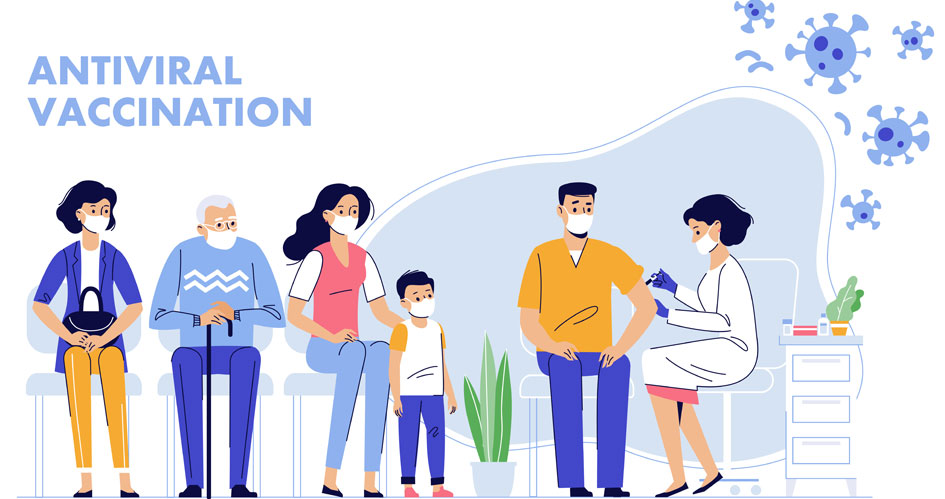
So, armed with optimism, patience and properly implementing all protective measures, we will give time to the health systems to operate within their limits without collapsing, to the state to plan the environment for economic recovery, and the international research community to reach the much-desired solution of the vaccine and vaccination. A significant difference between the current pandemic and that of 1918 lies precisely in the prospect of a vaccine against the new coronavirus, which will be available in the near future. Vaccination is undoubtedly the most effective, safest, and most economical method of prevention. Getting informed with documented scientific data from credible sources guarantees protection from conspiracy theories, hesitancy, and skepticism cultivated about vaccines from sources of dubious reliability. At this point, it is worth emphasizing how particularly important it is to continue regular vaccinations of children and adolescents even during the pandemic, to maintain the benefits that decades of vaccination programs have yielded.

Public Health is a valuable good that every intelligent person and developed society should not only protect but also upgrade, as health is a prerequisite for prosperity, progress, and social and individual well-being. The adoption of masks, social distancing, personal hygiene, and then vaccination is a behavior of high responsibility, indicating an understanding of the special circumstances and rendering the respect due to the medical and nursing staff and all those struggling to secure one more hospital bed for any one of us and not how and if we will celebrate the holiday parties. 

ANNA S. TZORTZI MD, FCCP
PNEUMONOLOGIST