

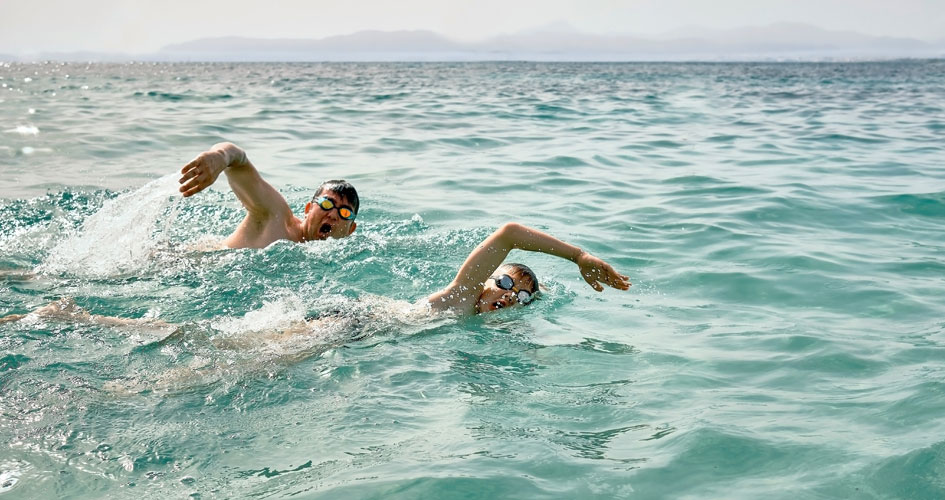
The sea is a source of life, recreation, and economic prosperity for Greece, supporting a strong maritime and tourism industry that attracts millions of visitors every year. Greeks have lived and thrived alongside the sea since birth. Yet, every year, Greece records tragic losses of life in the water.
According to Safe Water Sports data, over the past five years, approximately 378 people have lost their lives annually in water-related incidents in Greece.
July is estimated to be the month with highest fatality, accounting for 32% of all fatal incidents. The majority of deaths occur at sea, within 10 meters of the shoreline, and on beaches without lifeguard coverage (64%). Most victims are Greek nationals (61%) and men (67%), with male fatalities occurring at twice the rate of women (33%). Eight out of ten victims are over 60 years of age (80%).
In 2025, four children lost their lives to drowning in Greece, while this summer alone has already claimed the life of another young child.
According to the World Health Organization (WHO), approximately 300,000 people die from drowning worldwide each year, including around 75,000 children under the age of five.
Drowning is the fourth leading cause of death among children aged 1–4 years and the third leading cause of death among children aged 5–14 years. It is estimated that for every child who dies from drowning, another five require emergency medical care following a non-fatal submersion incident.
A child can literally drown in “a spoonful of water.”
Most drowning incidents involving infants under one year of age occur in shallow water, even in bathtubs.
Constant supervision is therefore essential. Young children should always remain within arm’s reach of a responsible adult who is fully attentive and free from distractions such as mobile phones, newspapers, or conversations.
Although global drowning mortality has declined by approximately 38% since 2000, around 3.8 deaths per 100,000 population still occur annually.
The World Health Organization (WHO, 2021) defines drowning as respiratory impairment resulting from submersion or immersion in liquid, leading to death, survival with morbidity, or survival without morbidity.
The entry of water into the lungs is a life-threatening condition that prevents normal breathing and gas exchange, resulting in hypoxia. Submersion lasting less than five minutes is associated with a lower risk of death or severe neurological injury. Immediate oxygenation during the critical first minutes—even when initiated by bystanders—is essential for minimizing brain injury and improving outcomes.
All individuals who survive a drowning incident, even if they appear asymptomatic initially, require medical assessment and observation for at least 24 hours, as serious respiratory complications such as pulmonary edema, electrolyte disturbances, cardiac arrhythmias, and neurological injury may develop because of the brain’s sensitivity to oxygen deprivation. Individuals who required cardiopulmonary resuscitation (CPR) should always be admitted to hospital for comprehensive evaluation.
Risk factors for drowning are related to swimmer behavior, the beach environment, marine traffic, and weather conditions. Most are predictable and preventable.
The aquatic environment is inherently unpredictable and possesses a powerful force that should never be underestimated.
We can enjoy the sea and the health benefits of swimming safely. The vast majority of drowning incidents are preventable through proper education, constant supervision, the use of appropriate safety equipment, adherence to safety rules, preparedness, vigilance, and timely recognition of hazards.
Effective prevention requires close cooperation among government authorities, the educational community, and the tourism and recreation sectors, together with increased public awareness, education, and training—particularly for parents of young children and older adults.
A particularly encouraging development is the decision of the Ministry of Education to incorporate swimming lessons and basic lifesaving principles into the national school curriculum.
Knowledge and appropriate education foster citizens with essential survival skills, risk awareness, and the ability to respond effectively in critical situations.
ANNA S. TZORTZI MD, FCCP
PNEUMONOLOGIST